
That Frustrating Moment When Your Garage Door Won't Stay Closed
You press the button on your remote, the garage door starts its descent, and then — just inches from the floor — it stops and reverses right back up. You try again. Same thing. Maybe you try holding the wall button down, and it finally closes, but the moment you let go, it creeps back up.
This is one of the most common garage door problems we see here at Edmond Garage Door Pro, and homeowners across Edmond deal with it more often than you'd think. The good news is that it's usually fixable. The key is understanding why it's happening so you can determine whether it's a quick DIY adjustment or something that needs professional attention.
The Safety Reversal System: What It Does and Why It Matters
Every modern garage door opener manufactured after 1993 is required by federal law to include two safety reversal mechanisms: photo-eye sensors and an auto-reverse feature tied to the opener's force settings. These systems exist to prevent the door from closing on a person, pet, or object.
When your door reverses before reaching the floor, one of these safety systems is almost always the reason. The opener thinks something is in the way, even when the path looks perfectly clear to you. Understanding which system is triggering the reversal is the first step toward solving the problem.
Check Your Photo-Eye Sensors First
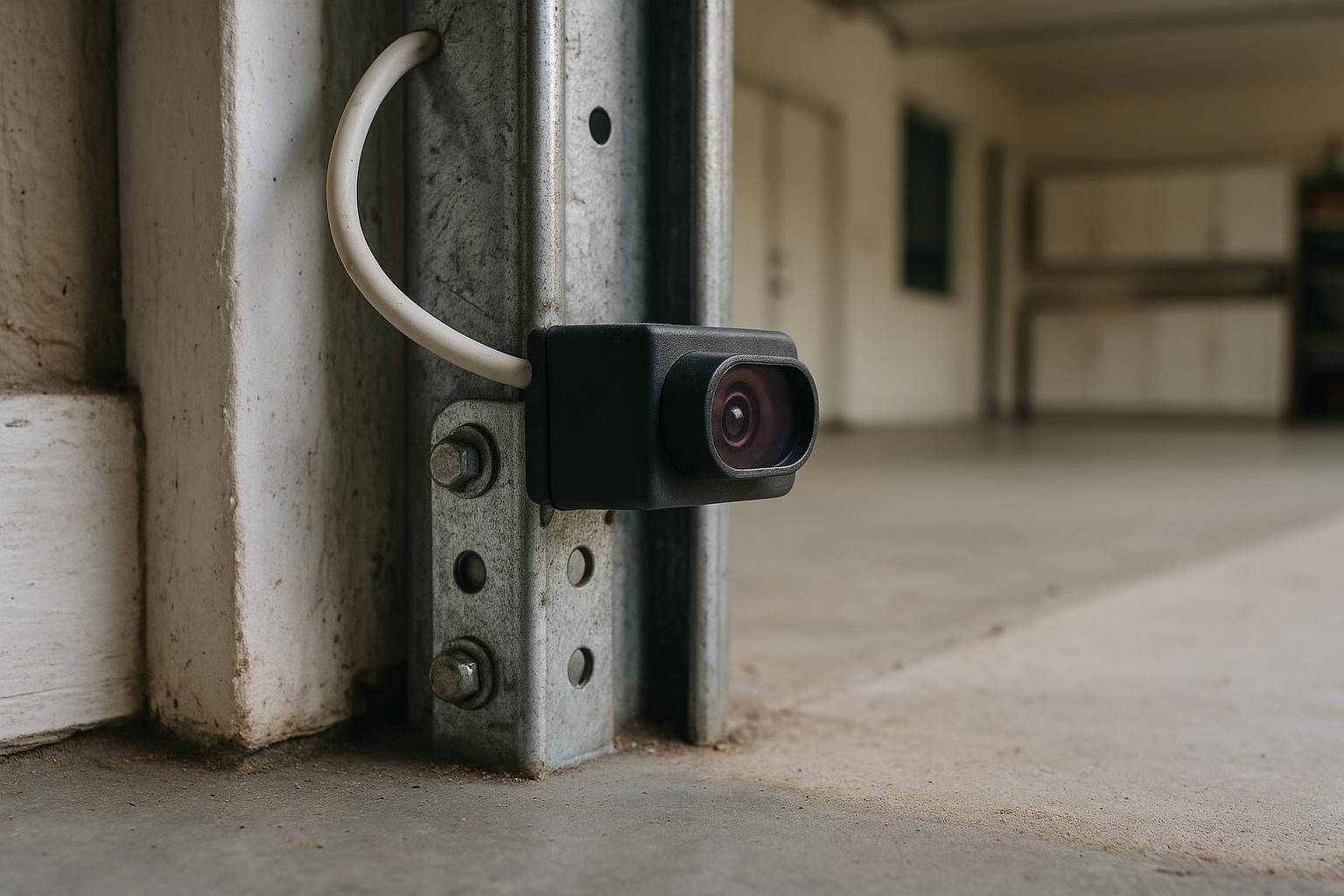
The photo-eye sensors are the two small devices mounted on either side of your garage door frame, about six inches off the ground. One emits an invisible infrared beam, and the other receives it. If anything breaks that beam while the door is closing, the opener immediately reverses the door.
Here's what to check:
- Alignment: If one sensor gets bumped — by a bike, a trash can, or even a curious kid — the beam won't connect properly. Most sensors have a small LED light that glows steady green when aligned and blinks when misaligned. Gently adjust the sensor brackets until both lights are solid.
- Dirty lenses: Oklahoma dust, cobwebs, and pollen can coat the sensor lenses over time. Wipe them down with a soft cloth. You'd be surprised how often this simple step solves the problem entirely.
- Sunlight interference: Direct afternoon sunlight can overwhelm the infrared receiver and trick it into thinking the beam is broken. If your garage faces west and the problem only happens in the late afternoon, this is likely the culprit. A small shade or cardboard tube around the receiving sensor can help.
- Damaged wiring: The thin wires running from the sensors back to the opener can get pinched, frayed, or chewed by rodents. Inspect the full length of the wire for any visible damage.
Force and Travel Settings May Need Adjustment
Your garage door opener has internal settings that control how much force it uses to close the door and how far it travels before stopping. If the close-force setting is too low, the opener interprets normal resistance — like the weight of the door itself or slight friction in the tracks — as an obstruction and reverses.
Similarly, if the travel limit is set incorrectly, the opener may think the door has hit something before it actually reaches the floor. Most openers have small adjustment screws or digital controls for these settings. Your owner's manual will show you where they are and how to make small adjustments.
A word of caution: Only make small, incremental changes. Setting the force too high can create a genuine safety hazard. If you're unsure, this is a great time to call a professional. Our team handles these adjustments regularly for homeowners throughout Edmond and the surrounding areas like Deer Creek and Piedmont.
Worn or Broken Springs Can Cause Reversal Issues
Your garage door springs do the heavy lifting — literally. They counterbalance the weight of the door so the opener doesn't have to work as hard. When springs wear out or lose tension over time, the door becomes heavier for the opener to move. The opener's safety system may detect this extra resistance and reverse the door, assuming something is blocking it.
Signs that your springs may be the issue include:
- The door feels noticeably heavier when you lift it manually
- The door slams down quickly when disconnected from the opener
- You hear loud creaking or popping sounds during operation
- One spring appears stretched, sagging, or visibly broken
Spring replacement is not a DIY job. These components are under extreme tension and can cause serious injury if handled improperly. If you suspect a spring issue, please call a qualified technician.
Track Problems and Roller Wear
Bent tracks, misaligned track brackets, or worn-out rollers can all create enough friction to trigger the opener's auto-reverse. Run your eye along both vertical tracks and the curved sections leading to the horizontal tracks near the ceiling. Look for dents, gaps between the track and the wall brackets, or places where the rollers seem to bind or stick.
Old steel rollers are particularly prone to seizing up, especially in Oklahoma's temperature swings. Upgrading to nylon rollers not only reduces friction but also makes your door significantly quieter — something your family and neighbors in Edmond will appreciate.
The Logic Board Could Be Failing
If you've checked the sensors, adjusted the settings, and confirmed the springs and tracks are in good shape, the problem may be internal to the opener itself. The logic board — essentially the opener's brain — can develop faults over time, especially after power surges. Oklahoma thunderstorms are notorious for sending voltage spikes through home electrical systems.
A failing logic board may send incorrect signals, causing erratic behavior like random reversals, partial closing, or the opener running without any input. In some cases, replacing the logic board is cost-effective. In others, especially with older units, a full opener replacement makes more sense financially.
When to Call a Professional
Some of the fixes above — cleaning sensors, checking alignment, wiping down lenses — are perfectly safe for any homeowner to try. But if the problem persists after those basic checks, or if you suspect spring, track, or opener motor issues, it's time to bring in help.
At Edmond Garage Door Pro, we diagnose reversal issues every week. We'll identify the exact cause, explain your options clearly, and get your door working reliably again. We serve homeowners and businesses across Edmond, Oklahoma City, Arcadia, and Guthrie, and we always show up when we say we will.
Don't Ignore a Reversing Garage Door
A garage door that won't close isn't just inconvenient — it's a security risk. An open garage is an invitation for theft, pests, and weather damage. If your door has been acting up, address it sooner rather than later. A quick service call now can save you from a much more expensive repair down the road.
Give us a call or reach out online to schedule a diagnostic visit. We'll get to the bottom of it and have your garage door closing properly again — every single time you press that button.