
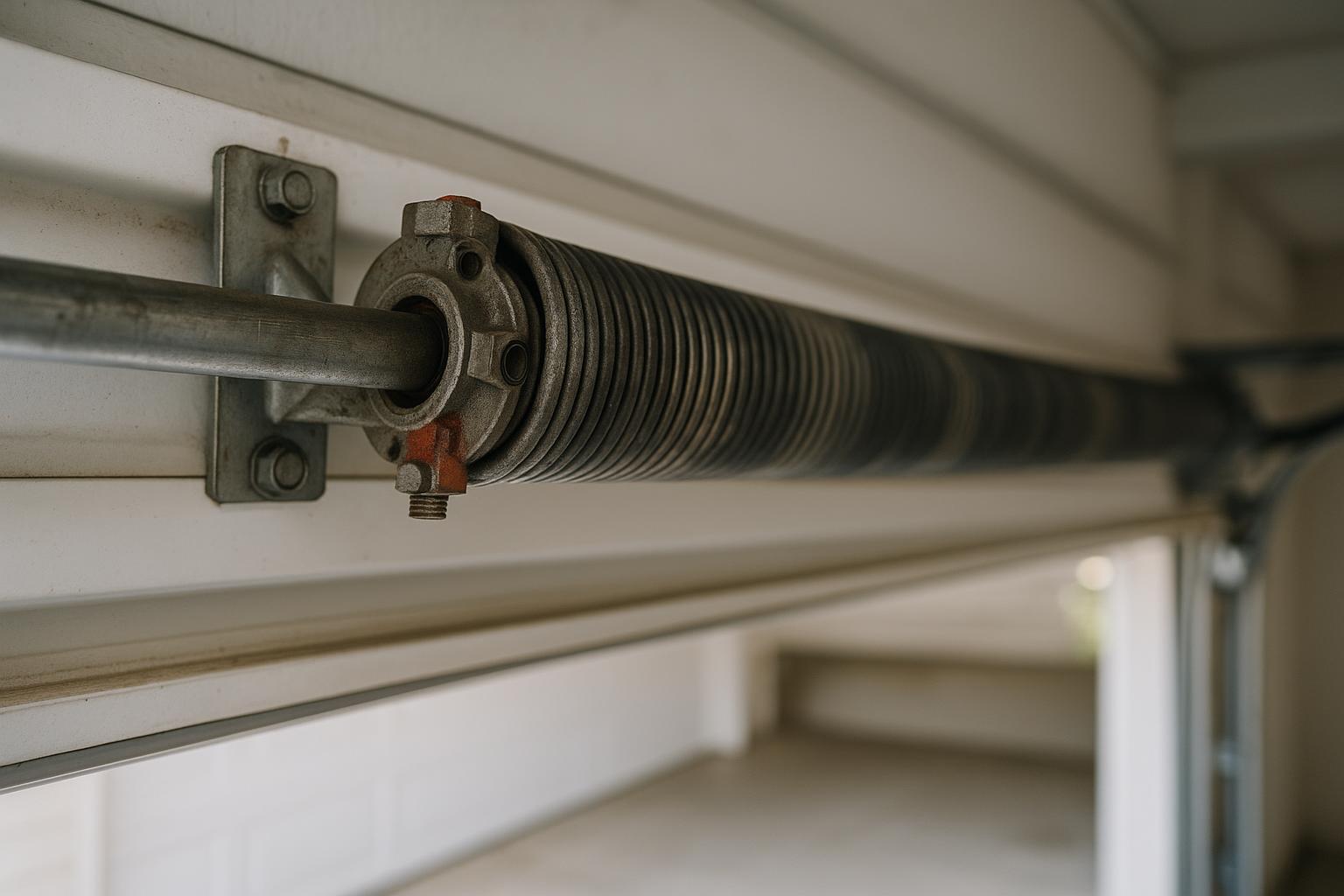
Your Garage Door Springs Are Doing More Work Than You Think
Every time you open or close your garage door, your springs are doing the heavy lifting — literally. A standard two-car garage door can weigh anywhere from 150 to 250 pounds, and it's the springs that bear that load, not the opener. The opener simply controls the motion, but the springs provide the counterbalance that makes the whole system work.
For homeowners in Edmond, where garage doors get used multiple times a day through blazing summers and icy winters, spring wear is one of the most common — and most important — maintenance issues to stay on top of. A broken spring isn't just an inconvenience. It can leave your car trapped inside, damage your door panels, or even pose a serious safety risk.
So how often should you actually replace your garage door springs? Let's break it down.
Understanding the Two Types of Garage Door Springs
Before we talk about replacement timelines, it helps to know what kind of springs you're working with. Most residential garage doors use one of two types:
- Torsion springs — These are mounted horizontally above the garage door opening. They twist and unwind to raise and lower the door. Torsion springs are the more common type in modern installations and tend to last longer.
- Extension springs — These run along the horizontal tracks on either side of the door. They stretch and contract to provide lifting force. Extension springs are typically found on older or lighter doors.
Both types are under extreme tension, which is why spring replacement is one of those jobs that should always be handled by a trained technician. We'll come back to that point later.
How Long Do Garage Door Springs Typically Last?
Most standard garage door springs are rated for approximately 10,000 cycles. One cycle equals one full open and one full close. That sounds like a lot, but it adds up faster than you'd expect.
If your household opens and closes the garage door four times a day — which is pretty typical for a family in Edmond — that's roughly 1,460 cycles per year. At that rate, a standard spring will last about 7 to 9 years.
If you use your garage door more frequently — maybe it's your primary entry point, or you have teenagers coming and going — that lifespan can shrink to 5 or 6 years. On the other hand, if you rarely use the garage, your springs could last well over a decade.
High-Cycle Springs: A Longer-Lasting Option
If you're tired of dealing with spring replacements, high-cycle springs are worth considering. These are available in 25,000-cycle and even 50,000-cycle ratings. They cost more upfront, but for homeowners who plan to stay in their home long-term, they can be a smart investment. We install high-cycle springs regularly for customers across Edmond and the surrounding areas who want fewer headaches down the road.
Signs Your Garage Door Springs Are Wearing Out
Springs rarely fail without warning. If you know what to look for, you can often catch the problem before it turns into an emergency. Here are the most common signs that your springs are nearing the end of their life:
- The door feels heavier than usual. Try lifting the door manually (with the opener disengaged). If it feels significantly heavier or won't stay open on its own about three to four feet off the ground, the springs are losing tension.
- The door opens unevenly. If one side of the door rises faster than the other, one of your springs may be weaker or close to breaking.
- You hear loud squeaking or grinding. Some noise is normal, but excessive squeaking can indicate that the coils are wearing thin and the metal is fatiguing.
- There's a visible gap in the spring. If you look at your torsion spring and see a clear gap or separation in the coils, the spring has already broken and needs immediate replacement.
- The opener struggles or strains. When springs lose their counterbalance, the opener has to work much harder. This can burn out the motor prematurely if the spring issue isn't addressed.
- The door slams shut quickly. A door that drops faster than normal when closing is a safety hazard and a clear sign of spring failure.
Why You Shouldn't Wait Until Springs Break
A lot of homeowners take a "if it ain't broke, don't fix it" approach to garage door springs. We understand the logic, but here's why proactive replacement is worth considering:
- Safety. A snapping torsion spring releases an enormous amount of stored energy. While modern safety cables and hardware reduce the risk of injury, a breaking spring can still damage property or startle someone nearby.
- Avoiding collateral damage. When a spring breaks, the sudden shift in weight can damage cables, drums, the opener, or even the door panels themselves. What starts as a $200 spring replacement can turn into a much larger repair bill.
- Convenience. A broken spring almost always means your garage door won't open. If your car is inside and you need to get to work, that's a problem. Scheduling a replacement before failure means you choose the timing, not the other way around.
Can You Replace Garage Door Springs Yourself?
We get this question a lot, and the honest answer is: we strongly advise against it. Garage door springs are under tremendous tension. Torsion springs, in particular, require specialized winding bars and precise knowledge of how many turns to apply based on the door's weight and size. An incorrect installation can result in serious injury or a door that doesn't function properly.
There are plenty of DIY-friendly garage door tasks — lubricating hinges, tightening hardware, testing the auto-reverse safety feature. Spring replacement isn't one of them. This is a job where hiring a professional isn't just recommended; it's the responsible choice.
What to Expect During a Professional Spring Replacement
When you call us for a spring replacement in Edmond, here's what the process typically looks like:
- Inspection. We assess the current springs, cables, drums, and overall door balance to determine exactly what needs to be replaced.
- Spring selection. We match the correct spring size, wire gauge, and cycle rating to your specific door. This isn't one-size-fits-all — getting the specs right matters.
- Replacement. We safely unwind the old springs, remove them, and install the new ones with the correct tension.
- Testing and adjustment. We test the door's balance, check the opener's force settings, and make sure everything operates smoothly and safely.
The whole process usually takes about an hour, and most homeowners are surprised at how affordable it is compared to the cost of dealing with the damage a broken spring can cause.
Keep Your Garage Door Running Smoothly
If your garage door springs are more than 7 years old, or if you've noticed any of the warning signs we mentioned, it's worth having them inspected. Catching a worn spring before it snaps saves you money, protects your door system, and keeps your family safe.
At Edmond Garage Door Pro, we've helped homeowners throughout Edmond, Deer Creek, Piedmont, and the greater Oklahoma City area stay ahead of spring failures with honest assessments and quality replacements. We show up on time, explain what we find, and never push services you don't need.
If you're not sure about the condition of your springs, give us a call. We're happy to take a look and give you a straight answer.